
Introduction
Choosing the right cabinet hinge is more than a matter of style — it directly affects how your doors function, how long they last, and how your cabinetry looks. This guide walks you through every key measurement and selection factor so you can order with confidence.
Types of Cabinet Hinges
Not all hinges are created equal. Understanding the major hinge types will help you match the right hardware to your cabinet style, construction, and application.
European Cup Hinges (Concealed Hinges)
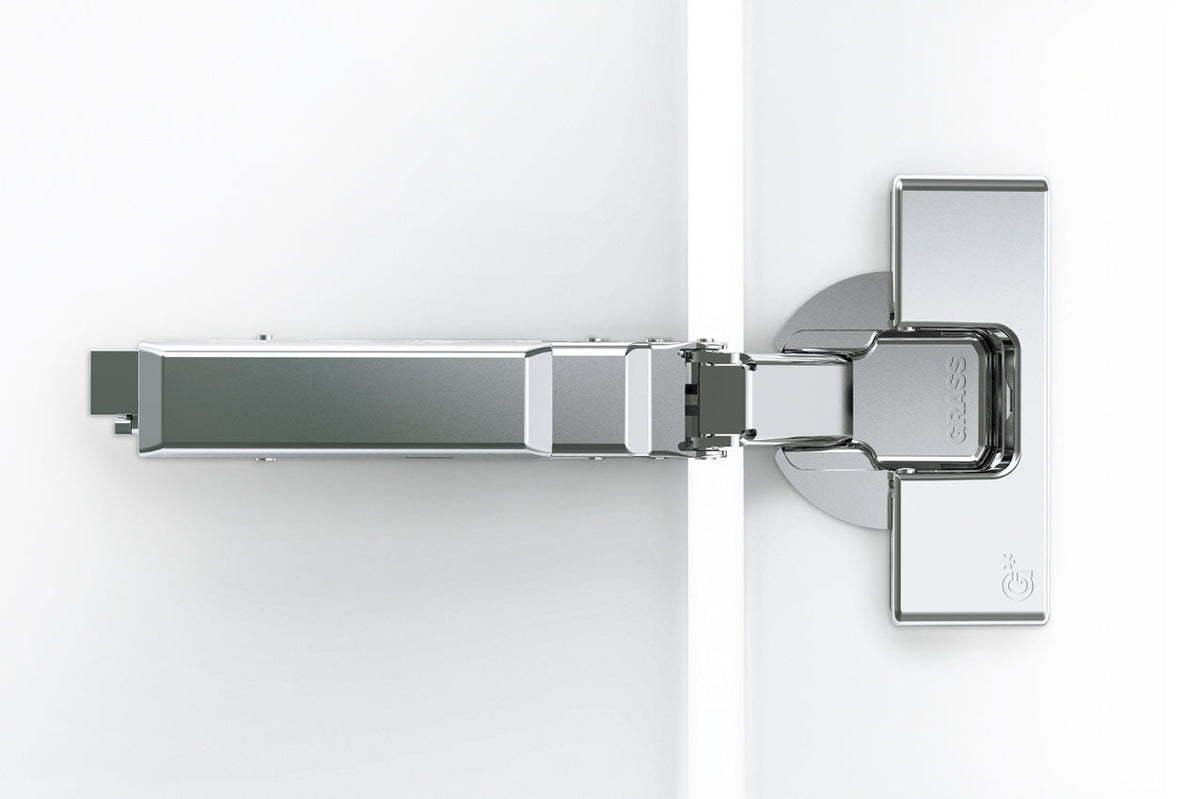
The most widely used hinge in modern cabinetry. A cup-shaped socket is mortised into the back of the door, and the hinge arm attaches to a separate mounting plate (baseplate) on the cabinet interior. When the door is closed, the hinge is completely hidden.
- Best for: Frameless and face frame cabinets, kitchen and bath cabinetry, contemporary and transitional styles
- Key advantage: 3-way adjustability after installation; easily swapped or upgraded
- Requires: 35mm boring hole, 13mm cup depth (standard)
A Note on Euro Hinges and Baseplates: European (Euro) hinges consist of two separate components — the hinge cup/arm and the baseplate (also called a mounting plate). These two parts must be compatible and are often sold separately. The baseplate determines the overlay and mounting method (clip-on vs. screw-on), and in many systems it stays on the cabinet while the door can be removed by simply unclipping the hinge arm. When ordering, always confirm that your hinge arm and baseplate are from the same system or are verified to be cross-compatible. Mixing brands or series can result in improper fit, reduced adjustability, or failure to clip securely.
Butt Hinges
A traditional two-leaf hinge mortised into both the door and the frame so the leaves sit flush. Common in face frame cabinetry and furniture with an inset door application.
- Best for: Traditional, Shaker, and period-style cabinetry; inset doors
- Key advantage: Classic, exposed look; no boring required
- Note: Requires precise mortising for a flush fit; limited adjustability after installation
Overlay Hinges (Surface-Mount)
Surface-mounted hinges that attach directly to the face of the door and the face frame — no mortising required. Available in decorative finishes to complement the cabinet style.
- Best for: Face frame cabinets, partial overlay applications, retrofit installs
- Key advantage: Easy installation, no boring or mortising
- Note: Visible when door is closed; finish matching is important
Pivot Hinges
Mount at the top and bottom of the door rather than on the side. Allow the door to swing on a center or offset pivot point.
- Best for: Tall doors, floor-to-ceiling cabinetry, specialty furniture
- Key advantage: Sleek, minimal visible hardware; handles heavy doors well
- Note: Installation is more complex; door alignment is critical
Specialty Hinges
A broad category covering application-specific hinge types:
- Flip-up / Lift-up Hinges — For horizontal doors that open upward (wall cabinets, murphy beds)
- Bi-fold Hinges — Allow doors to fold flat, ideal for tight spaces and pantry doors
- Glass Door Hinges — Designed for frameless glass doors; use clamps instead of screws
- Inset Hinges — Specialty cup hinges engineered specifically for inset (flush) door applications
- Blind Corner Hinges — Wide-angle hinges (165°+) for corner cabinet solutions
Step 1: Measure Your Cabinet Door and Frame
Before selecting a hinge, take the following measurements:
- Door height and width — Measure the door panel itself, not the opening.
- Door thickness — Most residential cabinet doors are ¾", but verify yours.
- Overlay — Measure how much the door overlaps the cabinet face frame or box edge (see Step 3).
- Boring hole diameter — European-style cup hinges typically require a 35mm hole. Confirm before ordering.
- Boring depth — Standard cup depth is 13mm. A shallower bore affects hinge seating and function.
- Distance from cup center to door edge — Typically 3mm–5mm depending on manufacturer spec.
Step 2: Identify Your Cabinet Face Type
The type of cabinet construction determines which hinge category you need:
- Face Frame Cabinets — A solid wood frame borders the cabinet opening. Hinges mount to this frame. Requires face frame-specific plates or clips.
- Frameless (Full Access) Cabinets — No face frame; the door mounts directly to the cabinet box side. Uses a standard or wide overlay plate.
- Inset Cabinets — The door sits flush inside the cabinet opening. Requires a specialty inset hinge with a 0mm overlay.
Step 3: Determine Your Overlay
Overlay is the amount the door covers the cabinet opening edge or face frame. Getting this right is critical — the wrong overlay causes gaps, misalignment, or doors that won't close.
- Full Overlay (½" or more) — Door nearly covers the full cabinet side; common in frameless/modern cabinetry.
- Half Overlay (⅜") — Used when two doors share a center partition; each door covers half the partition.
- Inset (0mm overlay) — Door sits flush within the frame opening.
- Custom overlays — Many European hinge systems offer adjustable overlay via interchangeable mounting plates (e.g., 0mm, 3mm, 9mm, 18mm inserts).
Tip: When in doubt, measure the existing hinge plate or gap with calipers for precision.
Step 4: Degree of Opening
How far do you need your door to swing open? This is especially important for corner cabinets, appliance garages, and tight kitchen layouts.
- 95°–110° — Standard opening; suitable for most base and wall cabinets.
- 120° — Wide opening; ideal for full-access frameless cabinetry with heavier items.
- 165°–170° — Near-flat opening; used for doors that need to fold back against adjacent surfaces or in blind corner solutions.
- 180° — Full-flat; less common, used in specialty applications like pocket doors or flip-up systems.
Note: Wider opening angles can affect the hinge's load rating. Check the manufacturer's weight capacity at the intended angle.
Step 5: Choose Your Closing Option
Modern cup hinges offer several closing mechanisms to match your design intent and user experience:
- Standard / Self-Closing — A built-in spring pulls the door shut from any position within the last 15°–20°. The most common option for residential kitchens.
- Soft-Close (Integrated Damper) — A hydraulic damper slows the door in the final inches of closing, eliminating slam. Highly recommended for high-use cabinets and premium installations.
- Soft-Close Adapter — A separate clip-on damper added to a standard hinge. A cost-effective retrofit option if upgrading existing cabinetry.
- Free-Swinging (No Spring) — The door stays wherever it's placed; no closing force. Used in specialty furniture and display cabinets.
- Push-to-Open — No handle required; a touch releases the door. Often paired with integrated or separate push-to-open mechanisms and requires a specific hinge type.
Step 6: Additional Factors to Consider
- Finish — Match or complement your pulls and knobs: nickel, matte black, brass, chrome, and more.
- Weight Rating — Heavier doors (glass, solid wood panels) require hinges with higher load ratings. Check kg/lb capacity per hinge and number of hinges needed.
- Adjustability — Quality European hinges offer 3-way adjustment (height, depth, lateral) after installation. Crucial for achieving perfectly aligned doors.
- Mounting Type — Clip-on vs. screw-on: clip-on hinges allow tool-free door removal, ideal for professional installs and future service.
- Concealment — European cup hinges are hidden when the door is closed. Decorative exposed hinges (butt, pivot, strap) are a design choice for traditional or period styles.
Quick Reference Checklist
- ☐ Hinge type selected (Euro cup, butt, overlay, pivot, specialty)
- ☐ Door thickness measured
- ☐ Overlay calculated (full, half, or inset)
- ☐ Cabinet face type identified (face frame, frameless, inset)
- ☐ Required degree of opening confirmed
- ☐ Closing option selected (standard, soft-close, push-to-open)
- ☐ Finish chosen to match hardware
- ☐ Door weight verified against hinge load rating
- ☐ Number of hinges per door confirmed (typically 2 for doors up to 40", 3 for taller)
- ☐ Euro hinge arm and baseplate confirmed compatible
Need help selecting the right hinge for your project? Browse our full hinge collection or contact our team — we're happy to help you spec the right hardware the first time.